Literature Review
Finding and selecting sources. There are many excellent sources for finding research related
almost every topic. Most sources can be found in large-scale databases which
are available on the internet. Some databases are free, while others require
a subscription in order access the full text documents. Each discipline has
databases which are specific to the field of study and one should learn to
know the important databases related one’s realms of interest. There are also
several general databases which provide researchers with an initial search of
literature. Wikipedia provides a comprehensive list of available databases at
the following LINK.
To begin a research project, students can start with the general databases
below: o
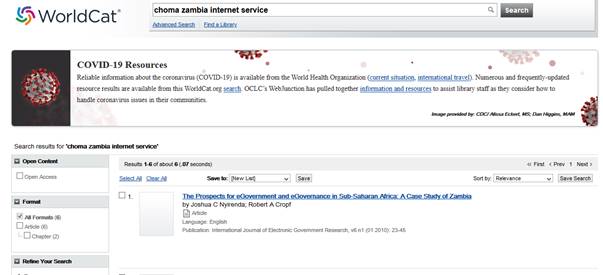
Worldcat. Worldcat is an online database of most of the books and
theses owned by the major libraries of the world. The books themselves are
not available via Worldcat, but by searching this
database researchers can see what books relate to their research question and
they can at least access the basic bilbliographic
information about the source (i.e., author, title, publication details). Worldcat does not include journal articles. o
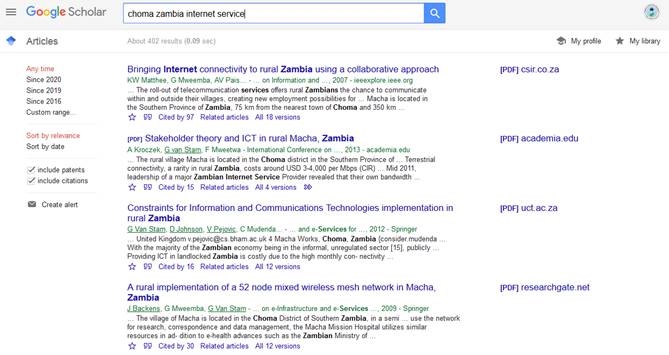
Google Scholar. Google
scholar accesses both journal articles and books, but tends to favor the
selection of journal articles and theses. Search results also usually
indicate whether a particular source is available in full text form, either
HTML or PDF. o
JStor. Although
it requires a subscription, JStore is especially
useful because it indexes 2000 scholarly journals and includes full versions
of all articles in the database. In order to search these databases, one
must learn how to search efficiently. Here are some tips: o
Do not use search
terms which are too broad; it will return too many results making it difficult
to choose which sources to consult. Use multiple adjectives in order to
narrow the results. o
Use quotation marks to get specific results. For example,
if one wants to search articles on Nelson Mandela, place his name inside
quotation marks: “Nelson Mandela.”
Otherwise, the search engines will return all instances of Nelson and all
instances of Mandela. Below are screen shots of search results
from Google Scholar and Worldcat. The search phrase
was: Choma
Zambia internet service. No quotation marks were used. One could just as
easily search with: Choma Zambia “internet service” and narrowed the search
further.
Selecting good sources. One must be careful to select sources carefully. Using a basic
Google search via the internet will return thousands of webpages and
documents, but the quality of information on those webpages or documents
varies and, frankly, much of it cannot be trusted. Seasoned researchers are
very critical of sources and scrutinize them carefully before using them.
Some lecturers and institutions forbid the use of Wikipedia, for example,
because it sometimes lacks sufficient rigor and/or referencing. In the end,
students and faculty must keep a critical eye and review sources for accuracy
and solid scholarly referencing. One should even be critical of studies
published in professional journals and scrutinize the methodology of the work
and the validity of the research. Controlling and organizing your sources. As researchers collect sources for a project, they control and
organize them by following some basic research principles and using several
key methods. First and foremost, good researchers take careful notes as they
do their research. Careless note taking leads to confused results and lost
time trying to find information. Second, a good researcher always has an
organizing system by which to control notes and sources. The better your
system, the better your research will be. So, get in the habit of taking careful
notes and develop a good organizational system. The “old school” method of
gathering information and sources was to use small cards with notes. Some
researchers have boxes and boxes of carefully indexed notes and sources which
help them when it is time write their final documents. In recent years, researchers have begun to
rely on computer programs to help them control and organize notes and
sources. One method is to use a bibliographic program as the basis for
research work. Zotero
is an open source program which can easily manage large numbers of sources
and can also be used to organize research notes. A variety of other programs
exist which can be helpful: note taking apps, mini databases, etc. Many are
available for smartphones and the collected data can be linked to the cloud
or to desktop and laptop programs. Whether by “old school” or “new school”
methods, create a personal system to control and organize your notes and your
sources. Writing up the Literature Review. After obtaining search results from the various databases,
researchers read or skim the sources to see if they are truly relevant to the
study. And, as mentioned above, a good researcher examines sources with a
critical eye to be sure the information is accurate and well-documented. If
the sources are strong, researchers organize them into groups according to
like categories in order to write the final literature review. At times,
researchers might include material from someone because the information is
widely accepted but they believe it is incorrect and they intend to dispute
it in their own research. |