Websites
|
|
Although
websites might seem outdated as an internet strategy, they continue to play
an important role for most organizations and individual entrepreneurs. The biggest
advantage of a website is its ability to house and accumulate materials,
which can then be made available to potential customers or constituencies.
Additionally, websites make a vast amount of information is readily available
to users and can be organized in such a way that the information is easy to
access quickly. |
|
|
|
|
National
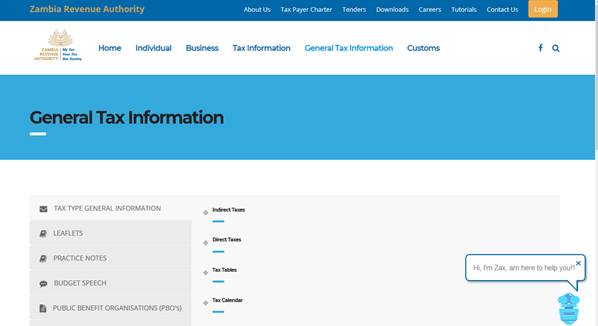
and international organizations such as Zambia’s ZRA or global services such
as Worldcat, Archive.org, and WHO maintain websites
which give users access to their information, resource materials, and
services. These could not be adequately handled via a platform like Facebook
or Twitter, nor could an internet platform such as Whatsapp
fulfill their purposes. On the other hand, a conventional internet webpage
provides a perfectly suited platform.
Through
a skilled design of pulldown menus, mass storage locations, and automated
computer scripts, websites can store, manage and deliver materials
(documents, etc.), deliver information (through specific webpages), and
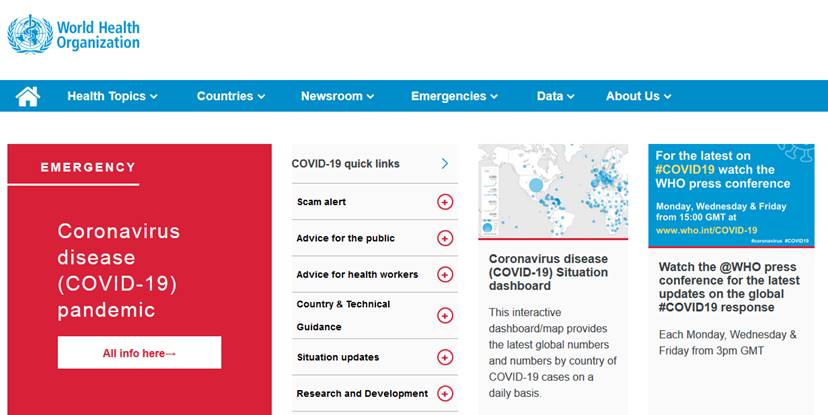
facilitate processes such as the collection of data. Note the WHO website
below and its utilization of pulldown menus and expandable links (show by the
plus sign).
Websites
can also be relatively simple, even as small as one page. The nature of
website construction lends itself to slow expansion over a long period of
time. So, an organization can begin with a very simple website design and
gradually add to it over time. If materials are stored in a systematic way,
the front page of the website can be adapted as needed to access the
expanding quantity of information and materials. Lastly,
websites can facilitate both the collection and the distribution of materials
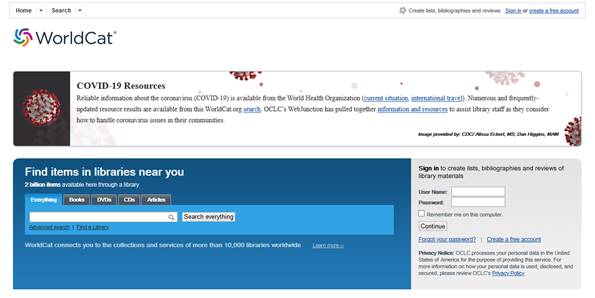
and content. Worldcat is a good example. This
website it constructed in such a way that numerous contributing libraries add
their own content, but the composite content is then available as a whole. In
effect, the creators of the web service have enlisted help from libraries around
the world to help them build the bibliographic database by contributing their
entries.
|
|